Take a Closer Look at
Galveston’s Architecture
No ghosts — Just unforgettable history on this 90-minute walking tour of the island’s most fascinating landmarks.
Pricing: $30 Adults, $20 Children
About the Tour
From hurricane-scarred landmarks to scandalous backstreets, the Galveston Historical Walking Tour reveals the characters, culture, and conflicts that made this island the boldest city in Texas.
We’ll explore how Galveston became the richest city in the state—and the wild, resilient, and rebellious spirit that defined the Free State of Galveston.
No ghosts—just rich, real stories brought to life by expert local guides.
Highlights
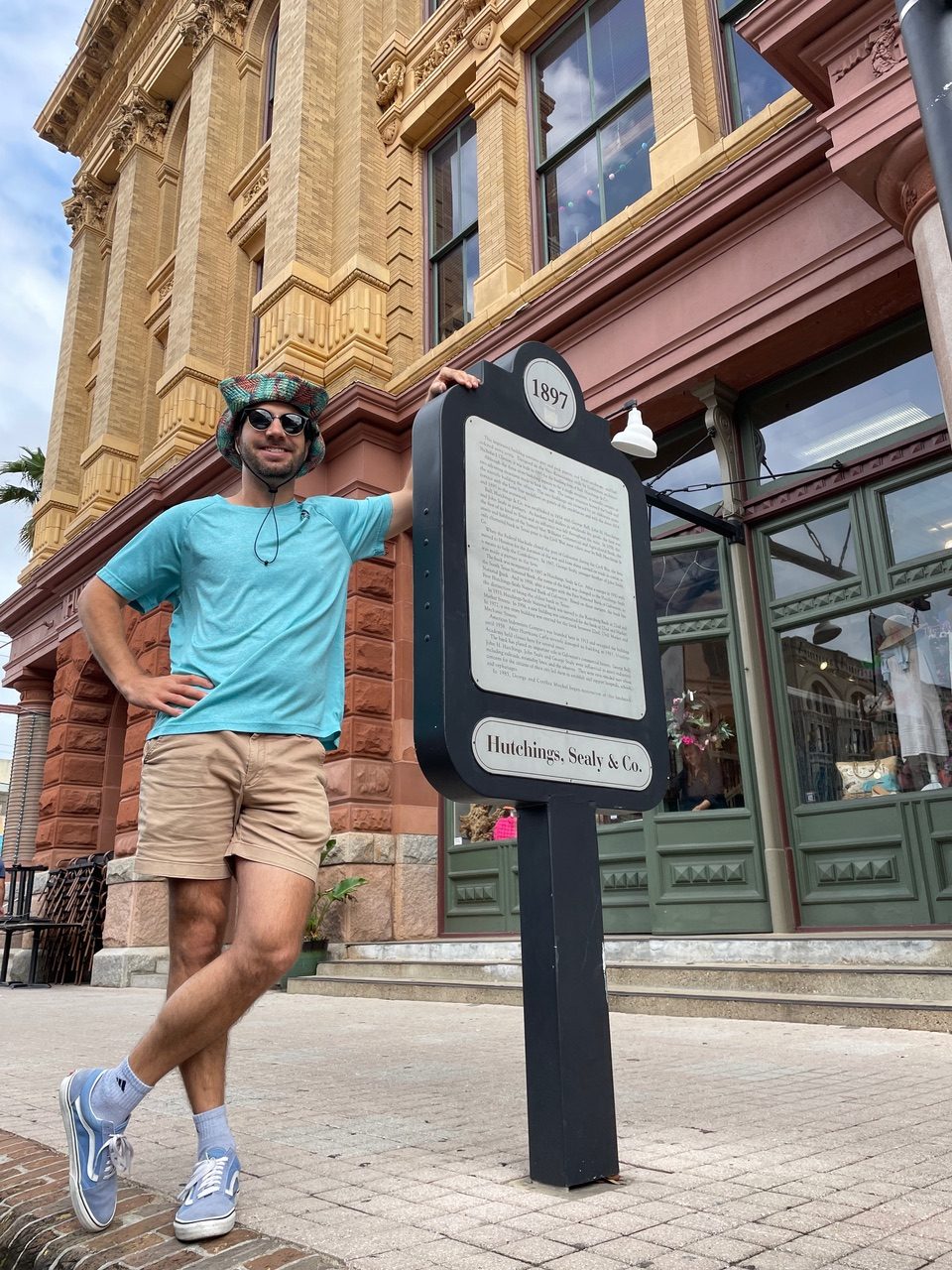
Galveston Architecture Tour Details
Things to Know Before You Go
Duration: 90 Minutes
Ticket: Mobile-ticket, instant confirmation
Max Group Size: 30 people
Ages: All ages welcome
Accessibility: Wheelchair, stroller & service animal friendly
Weather: Full refund if canceled due to poor weather
Stops Along the Way
Each stop on the tour reveals a new chapter in Galveston’s story—from triumph and tragedy to industry and indulgence.
Stop 1 — League-Kempner House (1880s–90s, 1702 Broadway)
We begin at the League-Kempner Mansion, once home to two of Galveston’s most powerful families.
Architecture: Victorian eclectic by Nicholas J. Clayton; wraparound porches and porte-cochère.
People: League & Kempner families — banking, railroads, philanthropy.
Fun fact: Currently undergoing restoration, symbol of Galveston’s preservation battles.
Stop 2— Trube “Castle” (1890, 1627 Sealy Ave.)
Now for one of Galveston’s most whimsical Victorian homes—the Trube Castle.
Architecture: Gothic Revival, turrets, 12 gables, fanciful roofline.
People: Danish merchant John Clement Trube and family.
Fun fact: Features a stained-glass window hidden behind a fake chimney.
Stop 3 — Sacred Heart Catholic Church (1904, 1302 Broadway)
This brilliant white landmark is Sacred Heart Catholic Church.
Architecture: Gothic Revival with Moorish & Byzantine details; built 1904 after 1900 Storm destroyed Clayton’s earlier version.
People: Served Galveston’s Irish and German Catholic immigrants.
Fun fact: Nicknamed the “White Castle of Galveston.” Exterior built from Portland cement stucco for storm resilience.
Stop 4 — Bishop’s Palace (1892, 1402 Broadway)
Galveston’s crown jewel—the Bishop’s Palace, also known as the Gresham House.
Architecture: Chateauesque/High Victorian by Nicholas J. Clayton; granite, limestone, and sandstone, elaborate towers.
People: Col. Walter Gresham and family; later the Catholic Diocese.
Fun fact: Survived the 1900 Storm, sheltered hundreds, called one of America’s finest Victorian houses.
Stop 5 — Vidor House (1899, 1702 Winnie St., near 17th & Winnie)
Our final stop isn’t a mansion, but a house with a story that shaped American cinema—the childhood home of director King Vidor.
Architecture: A modest late-19th century wood-frame home, built by Charles Vidor, a lumber merchant. Survived the 1900 Storm.
People: King Vidor (1894–1982) grew up here. He would go on to direct classics like The Big Parade (1925) and parts of The Wizard of Oz (1939).
Fun facts:
- King Vidor was six years old during the 1900 Storm; his survival experience left him with a lifelong awareness of human fragility.
- The home is tied to the Vidor family who also gave their name to the town of Vidor, Texas.
- Today, a “Tin Man & Toto” tree sculpture stands in front, honoring Vidor’s Wizard of Oz connection.
Where to Meet
Meet your guide at 123 Rosenberg St, in front of the Galveston Railroad Museum (Shearn Moody Plaza).
Have questions before you book? Call/Text: 409-996-2860
From lavish palaces of the elite to a simple family home that gave rise to a Hollywood legend, Broadway’s neighborhood captures every layer of Galveston’s story. Thank you for walking with me, and may these houses remind you that history is lived not only in stone castles but also in the memories of those who survived storms and went on to shape the world.